One owner per deliverable
Nothing is written by committee. Each stage has a single owner and produces a single deliverable, which is what makes a review gate meaningful — there is a document, an author, and somebody else reading it.
Governed orchestration
AssemblyWright arrives as a working delivery department — workflows built, roles staffed, review gates already set. It governs itself while it runs. And every part of it is yours to change, as far as you care to go.
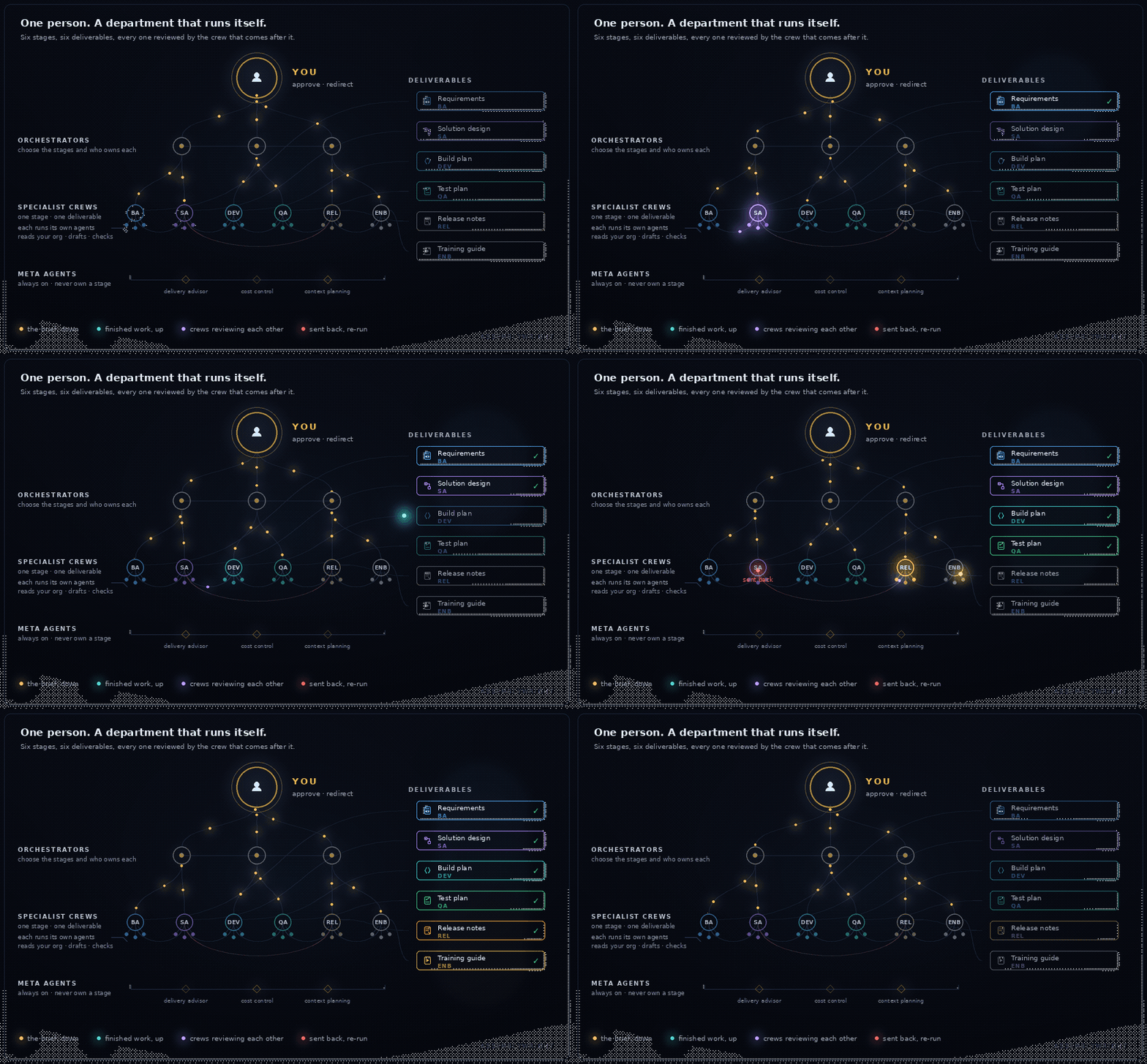
Not a metaphor
Every part of that picture is a thing in the product, not a metaphor.
Choosing the workflow, its stages, and which specialist owns each one. You can accept the shape it picks, or change it before anything starts.
A stage. One owner, one deliverable, and instructions of its own — so there is always someone accountable for a document, and always someone else who checks it.
The skills inside a specialist. Each can be switched off, rewritten, duplicated or reverted, and anything you have changed is flagged as changed.
What to make, to what standard, and the context to make it from — your org, plus the rules and definitions you have taught it.
The deliverable, filed. Requirements, a solution design, a build plan, a test plan, release notes, a training guide.
A review gate. Work does not move until the specialist that comes next has read it and returned findings.
Rework. A reviewer needs something changed upstream, so every approval from that stage forward is revoked and the work re-runs.
Control
The guarantees are structural. They are not settings you have to remember to switch on.
Nothing is written by committee. Each stage has a single owner and produces a single deliverable, which is what makes a review gate meaningful — there is a document, an author, and somebody else reading it.
Advisory records an opinion without blocking. Standard blocks, and allows revision cycles. Rigorous iterates until formal approval, then escalates rather than looping forever. Depth belongs to the stage-and-reviewer pair, so the same specialist can be advisory in one place and rigorous in another.
A reviewer returns findings tagged by severity against the whole deliverable, and the owner gets its own draft back to fix exactly those and nothing else. It is a revision, not a fresh attempt at the same brief.
Human checkpoints pause the Build and wait — on a security concern, a major design decision, a data risk, or a change of scope. You approve, ask a question, or send it back with a note.
Before anything touches your live system you get a plain-language pre-flight warning naming what will change and who it affects, and a rollback snapshot is taken first.
A workspace spend ceiling degrades the Build by narrowing how much runs in parallel before it would ever drop a review gate — slower is a better failure than sloppier. Running short pauses and asks rather than cancelling your work.
Out of the box, then yours
Most people never leave the first one. Nothing is hidden from those who do.
●○○Day one
It works before you configure anything. The defaults are not placeholders — they are the settings we would pick for you.
●●○Configure
The things you will want to change first are the things that are easiest to change.
●●●Customise
The floor does not drop out. Even the workflows you invent get pushed toward governance rather than away from it.
AssemblyWright is in private beta and onboarding design partners. Tell us about the request you would run first, and we will be in touch.
Works with the system you already run. No migration, no new platform.